
Why Do Dog Trainers Need a gps dog tracking system for Field Work?
For professional dog trainers who operate in open fields, dense forests, or expansive rural terrain, keeping a reliable line of sight on every dog is simply not possible. The unpredictability of field environments means a well-trained dog can disappear into thick brush within seconds, especially during off-leash drills, scent work, or hunting simulations. This is precisely why adopting a gps dog tracking system has become a standard part of the professional trainer's toolkit rather than an optional luxury.
A gps dog tracking system is not just about knowing where a dog is at any given moment. For trainers working with multiple dogs across shifting terrain, it transforms the entire workflow — improving safety, refining training assessments, and giving trainers the situational awareness they need to make better decisions in real time. Understanding why this technology is essential for field work requires a closer look at the specific demands that outdoor professional training places on both trainers and their animals.
The Unique Challenges of Field-Based Dog Training
Unpredictable Terrain and Limited Visibility
Field training rarely happens in neat, enclosed environments. Whether a trainer is working on a mountain trail, across farmland, or through woodland, the terrain creates natural barriers that block sightlines and make direct supervision difficult. A dog responding to a scent or a distraction can move hundreds of meters in under a minute, placing itself well outside visual range.
In these conditions, relying on voice commands or whistles alone is insufficient. Sound carries inconsistently in outdoor environments, and a dog in full pursuit mode may not respond to recall cues the way it would in a controlled setting. A gps dog tracking system gives the trainer a continuous positional feed, eliminating the guesswork of 'which direction did it go' and replacing it with precise, actionable data.
This becomes especially critical when training scenarios intentionally test a dog's independent decision-making, such as search-and-rescue simulations or bird dog field trials. The trainer needs the dog to operate with a degree of autonomy while still being able to locate it immediately if something goes wrong.
Managing Multiple Dogs Simultaneously
Many professional trainers work with more than one dog at a time during field sessions. Coordinating multiple dogs across open terrain without a gps dog tracking system means dividing attention constantly and relying heavily on assistants or handlers. Even then, a moment of distraction can result in one dog wandering far off course while the trainer is focused on another.
With a reliable gps dog tracking system in place, a single trainer can monitor the real-time positions of several dogs from one device. This not only improves safety but also allows the trainer to observe movement patterns simultaneously — a significant advantage when evaluating how different dogs respond to the same field exercise.
How a GPS Dog Tracking System Improves Training Quality
Real-Time Behavioral Analysis
One of the less obvious benefits of using a gps dog tracking system during field work is the quality of behavioral insight it generates. By reviewing movement data after a training session, a trainer can reconstruct exactly how a dog navigated a course, where it hesitated, how far it ranged before returning to the handler, and whether its movements aligned with the intended training objective.
This kind of post-session analysis is impossible without accurate location data. A trainer relying on memory or secondhand observation will inevitably miss subtle behavioral cues that the movement data would reveal clearly. Over time, this translates into more precise training adjustments and measurable improvement in a dog's field performance.
For trainers working with dogs intended for professional roles — such as law enforcement K9 units, hunting dogs, or search-and-rescue animals — this level of analytical rigor is not optional. The gps dog tracking system becomes part of the assessment toolkit, not just a safety net.
Geofencing as a Training Boundary Tool
Modern gps dog tracking systems typically include geofencing capabilities, which allow a trainer to define a virtual perimeter around a training area. If a dog moves beyond that boundary, the system sends an immediate alert to the trainer's device. This is particularly useful when working on recall training, where the goal is to test how far a dog will range before responding to a recall command.
Rather than physically chasing a dog that has moved out of the intended zone, the trainer receives a notification and can respond calmly and deliberately. This prevents the training scenario from breaking down into a reactive chase situation, which can inadvertently reinforce undesirable behavior in the dog.
Geofencing also helps trainers set progressive challenge levels. In early sessions, the boundary can be set tightly to keep the dog working within a small zone. As the dog's recall reliability improves, the trainer can expand the perimeter gradually, using the gps dog tracking system to verify that the dog is consistently returning within the defined range.
Safety and Risk Management in the Field
Reducing the Risk of Lost or Injured Dogs
Field environments present genuine hazards — roads, water features, wildlife, and fencing can all create dangerous situations for a dog that has moved beyond the trainer's sight. A gps dog tracking system drastically reduces the response time when a dog goes missing or moves into a potentially dangerous area, giving the trainer the ability to intervene quickly rather than conducting a time-consuming search.
For professional trainers, a lost or injured dog during a session represents not only a welfare concern but also a significant professional liability. Clients who have placed high-value working dogs in a trainer's care expect a standard of supervision that includes modern safety tools. A gps dog tracking system demonstrates that professional commitment and provides a documented record of the dog's movements throughout the session.
In emergencies, every minute matters. The ability to pull up a dog's current location on a mobile device and navigate directly to it can make the difference between a minor incident and a serious one. This is why the gps dog tracking system has become a non-negotiable piece of field safety equipment for trainers who take their responsibilities seriously.
Building Client Confidence and Professional Credibility
Clients who entrust their dogs to a professional trainer want evidence that every precaution has been taken. When a trainer can demonstrate the use of a gps dog tracking system, complete with session data showing where the dog was at all times, it builds a level of trust that verbal assurances alone cannot achieve.
This is especially relevant for trainers working with high-value working breeds or dogs being prepared for competitive or professional deployment. The gps dog tracking system is not just a tool — it becomes part of the professional service offering, differentiating a trainer who uses evidence-based methods from one who relies solely on intuition and experience.
Choosing the Right GPS Dog Tracking System for Field Use
Key Features That Matter for Professional Trainers
Not every gps dog tracking system is built with the demands of professional field training in mind. Trainers need systems that offer real-time location updates with minimal delay, robust connectivity across remote terrain, and battery life capable of sustaining full-day training sessions. A system that loses signal in forested areas or dies halfway through the afternoon is a liability rather than an asset.
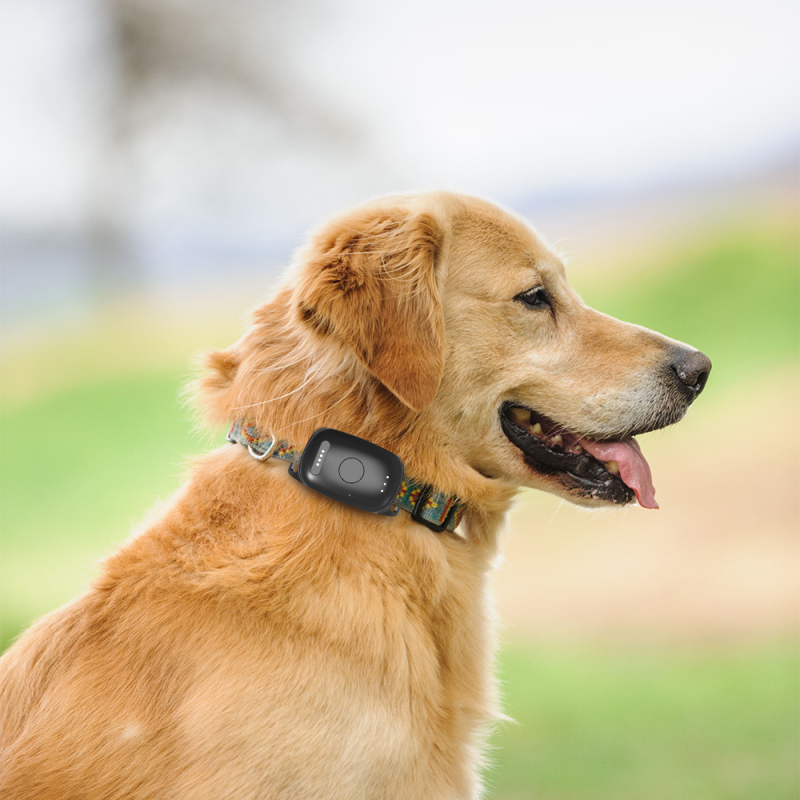
The interface matters as well. A gps dog tracking system designed for field professionals should allow quick, intuitive access to location data without requiring a trainer to navigate through complicated menus while managing a dog in the field. Mobile app integration with clear mapping functionality and instant alert delivery is a practical necessity rather than a convenience feature.
Durability is another critical factor. Field training environments expose equipment to mud, water, physical impact, and extreme temperatures. A gps dog tracking system intended for professional use needs to be built to withstand these conditions across sustained, repeated use — not just occasional recreational outings.
4G Connectivity and Its Advantage Over Traditional Radio-Based Systems
Older radio-frequency-based tracking collars have been used by hunters and trainers for decades, but they come with significant limitations in terms of range, accuracy, and data richness. A modern gps dog tracking system operating on a 4G network offers substantially improved location precision, broader coverage across cellular service areas, and the ability to deliver real-time data to a smartphone rather than a dedicated handheld receiver.
For trainers working in areas with cellular coverage, a 4G-enabled gps dog tracking system represents a major upgrade in both reliability and usability. The shift to cellular-based tracking also means the trainer can receive alerts and check positions remotely — a useful feature when coordinating with assistants or reviewing session data after returning home.
The combination of GPS precision with 4G data transmission creates a gps dog tracking system that operates as a continuous, reliable reporting tool rather than an emergency fallback. This distinction matters enormously for trainers who want to integrate tracking data into their training methodology rather than treating it purely as a safety measure.
FAQ
Is a GPS dog tracking system suitable for all types of field training?
A gps dog tracking system is suitable for most forms of field training, including hunting dog preparation, search-and-rescue work, off-leash recall training, and competitive sport dog conditioning. The main consideration is whether the terrain falls within cellular or GPS signal coverage, as heavily forested or very remote areas may reduce system performance depending on the technology used.
How does a GPS dog tracking system help with off-leash training specifically?
During off-leash training, a gps dog tracking system allows the trainer to grant a dog genuine freedom of movement while maintaining full situational awareness. The trainer can observe ranging behavior in real time, set geofence alerts to flag when a dog exceeds an intended boundary, and analyze post-session movement data to evaluate how consistently the dog is responding to recall cues across different distances and terrain types.
Can a GPS dog tracking system replace traditional training tools?
A gps dog tracking system is a supplementary tool that enhances training quality and safety — it does not replace the foundational skills, techniques, and judgment of an experienced trainer. It works alongside established training methods by providing data and safety coverage that were previously unavailable in field environments, allowing trainers to work with greater confidence and precision.
What should a professional trainer look for when selecting a GPS dog tracking system?
Professional trainers should prioritize real-time tracking accuracy, battery longevity, durable construction rated for outdoor conditions, ease of use through a mobile interface, geofencing capability, and reliable connectivity in the types of terrain where they typically train. A gps dog tracking system that performs consistently across varied environments and provides clear, immediate data will deliver the most value in a working professional context.


 Office:29th Floor,Changjiang Center, Renmin Road, Longhua, Shenzhen.
 Factory: 201# Building 1A, Nankechuang Yuangu, Gaofeng Road, Longhua, Shenzhen.
 +86 15899795842
